Marco Island Dental Blog

Island Tower Dentistry

How Does Computer-Guided T-Scan Occlusion Analysis Identify Hidden Causes of Fractured Dental Work?

When a crown fractures out of the blue, almost every patient reaches the same conclusion: bad luck. Wrong bite on a piece of bread, a hard olive pit, a chip of ice at the wrong angle. It happens, you move on, you get it replaced.

In our experience, it usually isn’t luck at all. It’s the bite. And the reason that cause so often goes unidentified is that a standard visual exam, even a thorough one, isn’t designed to detect it.

At Island Tower Dentistry in Marco Island, Dr. Van Dyke uses computer-guided occlusion analysis to look at something a conventional exam cannot capture: not just where your teeth meet, but exactly when they meet and how hard. That distinction turns out to be the difference between dental work that lasts eighteen months and dental work that lasts fifteen years.

Why a Traditional Exam Can Miss the Real Cause

Visual dental exams and traditional articulating paper, the blue or red bite paper most people have bitten down on at some point, tell us something useful. They show us where your teeth touch.

What they cannot show us is when your teeth touch, or with how much force. And that is precisely where the problem hides.

Your bite is not a static event. It is a sequence. When you close your jaw, your teeth arrive at slightly different moments, in a specific order, distributing force across dozens of contact points. If one tooth arrives even a microsecond too early, it absorbs a disproportionate share of the total load before the rest of your bite has a chance to share it.

Now imagine that tooth is carrying a porcelain crown. Every single time you close your mouth, chew, swallow, or clench in your sleep, that restoration takes the brunt of your bite force. It is a tiny sledgehammer striking thousands of times a day. Individually, each impact is harmless. Cumulatively, that repetitive mechanical stress eventually shatters the dental work, and it does so without warning.

The crown did not fail because the porcelain was poor. It failed because it was being asked to do a job no material could do indefinitely.

What T-Scan Occlusion Analysis Actually Measures

Intraoral scanning is often described purely in terms of 3D images of teeth, which undersells what it can do. The more valuable application is mapping how your bite actually functions in motion.

Our digital occlusion analysis software captures dynamic, real-time bite force patterns. Rather than a single static impression, it records the full sequence of your bite as it happens. Specifically, it shows us three things a traditional exam cannot:

First, which teeth are clenching first. The order of contact reveals whether one tooth is arriving ahead of the others and taking the initial load alone.

Second, how forces shift as you move your jaw. Your bite when you chew sideways is different from your bite when you close straight down, and destructive friction points often show up only during movement.

Third, the actual pressure at each contact point, measured down to the exact percentage of your total bite force. Not “this looks heavy,” but a number.

Together, that data reveals hidden imbalances and destructive friction points that are completely invisible to the naked eye. We are no longer inferring what might be happening. We are reading it.

Why Implants and Crowns Are Less Forgiving Than Natural Teeth

There is a piece of physics here worth understanding, because it explains why occlusion matters more for restored teeth than for natural ones.

A natural tooth is not rigidly locked into your jaw. It is suspended by a periodontal ligament, a thin layer of fibrous tissue between root and bone that allows a small amount of movement. That ligament functions as a shock absorber, cushioning force and giving your tooth a fraction of a millimeter of give under pressure. It is a remarkably effective piece of biological engineering.

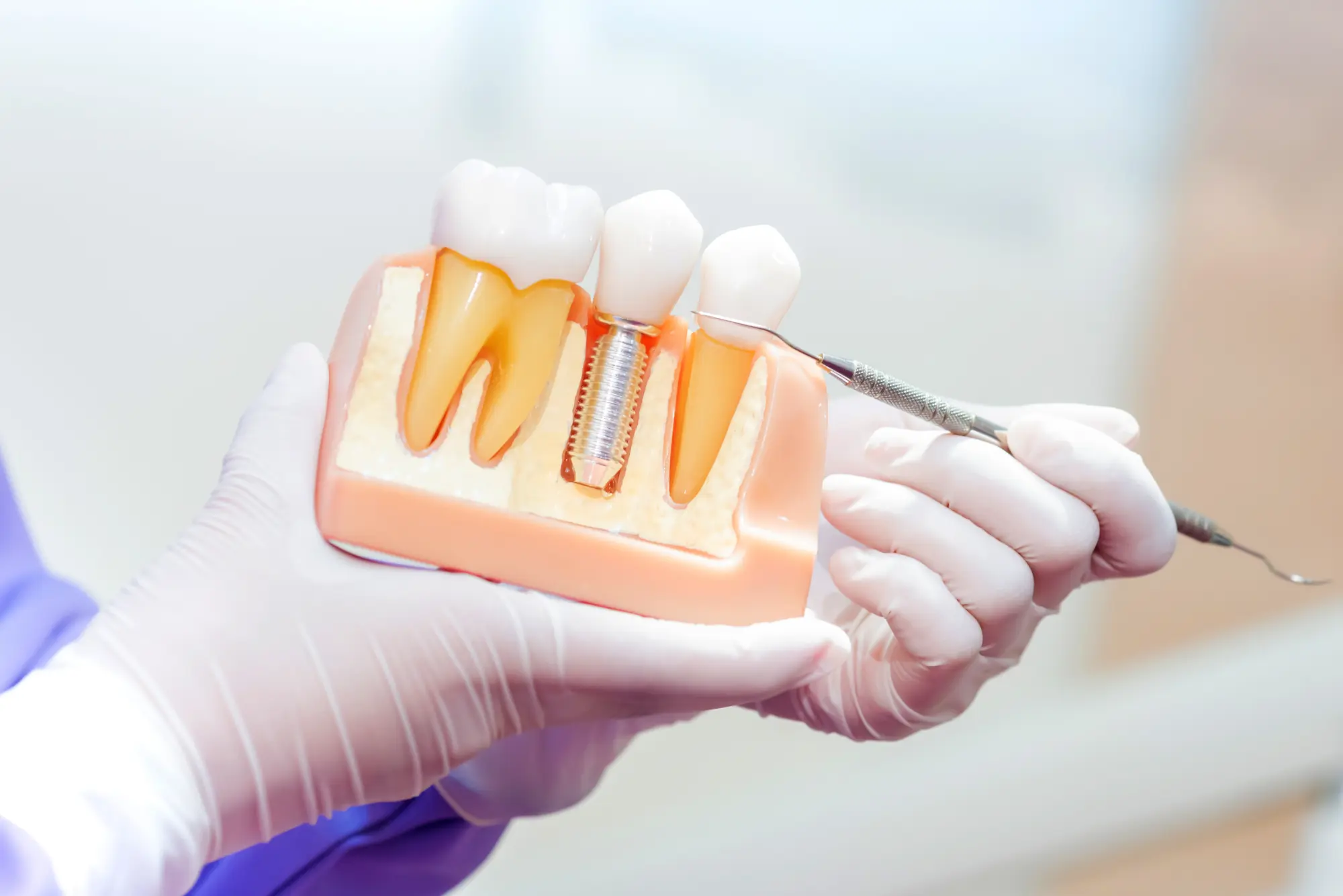
A dental implant has no periodontal ligament. It is fused directly to bone, which is exactly what makes it stable, but it also means it has zero give. Force that a natural tooth would partially absorb transfers straight through an implant to the restoration on top of it.

Dental materials are bound by physics. Modern porcelain and zirconia are extraordinarily strong, but strength is not the same as immunity. If the occlusion is not properly balanced, even a high-end restoration is subject to destructive force concentrated in one place, repeatedly, for years.

Balancing the bite is how we make sure the material is never asked to exceed what physics allows. It is the least glamorous part of restorative dentistry and one of the most important.

The Difference Between an 18-Month Crown and a 15-Year Crown

We think about this in concrete terms. If Dr. Van Dyke places a substantial crown and does not address an underlying bite imbalance, that crown might fracture within eighteen months. If he corrects the bite first, the same crown on the same tooth can serve you for fifteen years or more.

Nothing about the crown itself changed in that comparison. The material, the fit, the craftsmanship, and our in-house lab work are identical. The only variable is whether the mechanical environment it lives in was corrected before it was placed.

Restorative dentistry is a genuine investment in your health, your comfort, and your lifestyle. Protecting that investment is not an optional extra step. When a patient tells us they have spent thousands replacing the same tooth repeatedly, we are looking at the cost of an unaddressed bite, paid in installments.

More Precise Adjustments, Less Tooth Removed

Here is a benefit patients rarely anticipate: digital occlusion analysis allows us to be significantly more conservative with your natural tooth structure.

Without this data, correcting a bite means making broad adjustments based on where an ink mark appears on paper, then checking again, then adjusting again. The process works, but it is imprecise by nature, and every pass removes a little more enamel than might strictly be necessary.

With digital mapping, the data pinpoints the exact microscopic ridge causing the interference. We know precisely where to adjust, what to correct, and just as importantly, what to leave completely alone. That means removing only what is absolutely necessary to create a harmonious bite.

It also means that when a previous restoration failed, we understand why rather than guessing. The alternative is replacing a crown and hoping the bite behaves better this time. We would rather know.

“My Last Dentist Replaced This Crown Three Times”

We hear this one regularly, and it is always said with a mix of frustration and resignation. A patient has had the same crown remade two or three times, each one eventually breaking, and nobody has been able to explain it.

When we run occlusion analysis, the answer is usually right there on the screen.

We want to be diplomatic about this, because it is almost never a matter of poor care. Dentistry is a continuous evolution of technology, and the previous dentist was very likely evaluating the tooth itself, which probably looked entirely fine in isolation. Good margins, good fit, nothing obviously wrong.

The limitation was one of scope rather than skill. Looking at a single tooth cannot reveal a problem that exists in the relationship between teeth. By using dynamic digital scanning, we are looking at the entire moving engine of the mouth rather than one component of it.

Showing patients that data changes the conversation completely. The repeated failure was never bad luck or fragile porcelain. It was an unaddressed bite force pattern, and now that we can see it, we can fix it.

Why This Is Essential for Full Mouth Reconstruction

For a single crown, occlusion analysis is valuable. For full mouth reconstruction, we consider it essential, not optional.

In complex cases where we reset multiple arches, we are not adjusting a bite. We are completely redesigning your jaw’s entire relationship, establishing new contact points, new vertical dimension, and a new path of motion from scratch. Every one of those decisions either supports long-term stability or quietly builds stress into the result.

Analyzing occlusion up front lets us construct the new smile along a stable, comfortable path of motion rather than discovering problems after everything is cemented. It eliminates hidden stress points across the entire arch before they have a chance to concentrate force on any single restoration.

That is the difference between a reconstruction that looks beautiful for ten years and one that looks beautiful and functions perfectly for a lifetime. When you are investing in a full arch or a full mouth, the underlying mechanics deserve at least as much attention as the aesthetics.

Your Bite on the Golf Course Is Not Your Bite at Home

This is one of our favorite applications of the technology, and it is especially relevant to our patients here.

A golfer’s bite force is completely different from that same person’s bite force relaxing at home. When you brace for a heavy swing, or track a pickleball across the court with real intensity, your body naturally tenses. Jaw clenching is part of that tension response, and the forces generated are significantly higher than during normal chewing.

Predictive software maps these distinct clenching patterns, which lets us recognize high-load risk in active patients rather than discovering it after a restoration fails. For an active retiree who spends mornings on the courts and afternoons on the water, we can proactively design reinforced restorations built for the forces that lifestyle actually produces.

Designing for someone’s real life rather than an average mouth is a small shift in thinking that makes a substantial difference in how long the work lasts.

Seeing the Why, Not Just Being Told the What

At Island Tower Dentistry, we lean heavily into a “see what I see” philosophy, and occlusion analysis is one of the clearest examples of why.

The software translates complex mechanical pressures into an intuitive, color-coded 3D map on the monitor. You can watch your own teeth bite together digitally and see red or hot pink spikes exactly where excessive force is overloading a tooth. There is no need to take our word for it. The overload is visible, measurable, and right there on the screen.

Something shifts for patients in that moment. They stop being told what is wrong and start seeing why it happened. It bridges the gap between clinician and patient and turns you into an informed partner in your own care, which is genuinely how we prefer to work.

If you have had a crown or bridge break more than once, if you have dental work that keeps failing without explanation, or if you are planning a significant restorative investment and want it done right the first time, we would be glad to take a look. Understanding your bite before we build on it is one of the best things you can do for the longevity of your smile.

Call Island Tower Dentistry at (239) 394-1004 to schedule a consultation with Dr. Van Dyke. Let’s find out what your bite has been doing when no one was measuring.
How Does LANAP Laser Surgery Regenerate Lost Jawbone Tissue Around Teeth Damaged by Gum Disease?

Most people think gum disease is just about gums. Bleeding when you brush, a little puffiness, maybe some tenderness. Annoying, but not alarming.

What is actually happening below the surface is more consequential than that. Gum disease is a chronic inflammatory condition, and when it goes untreated, it destroys the supporting bone structure that holds your teeth in place. That bone loss is the real story. It is what eventually produces loose teeth, shifting bites, and tooth loss, and for most of its course it does this quietly and without pain.

This is exactly why regeneration matters so much. If we can rebuild the lost foundation, we are not just cleaning up an infection. We are strengthening the attachment between tooth and bone and restoring genuine health to the area. At Island Tower Dentistry in Marco Island, Dr. Van Dyke was an early adopter of LANAP laser therapy for this reason, and here is how it works.

Gum Disease Is a Bone Problem, Not Just a Gum Problem

Think of your teeth the way you would think of fence posts set in soil. The post itself can be perfectly sound, but if the ground around it erodes, the post starts to move. Eventually it comes out.

Your jawbone is that ground. Periodontal bacteria trigger a chronic inflammatory response, and that inflammation gradually breaks down the bone surrounding your tooth roots. As bone recedes, the pockets between tooth and gum deepen, which gives bacteria a more protected place to live, which drives more inflammation. It becomes a cycle that feeds itself.

By the time a tooth actually feels loose, a significant amount of that foundation is already gone. That is the frustrating part of gum disease and also the reason we talk about it so often. Traditional treatment focused largely on stopping the destruction. What makes regeneration different is that it addresses what has already been lost.

How LANAP Triggers Regeneration Instead of Just Removing Tissue

When Dr. Van Dyke first trained in LANAP, the thing that stood out was not the absence of a scalpel. It was that the procedure does something conventional surgery does not: it actively encourages the body to rebuild.

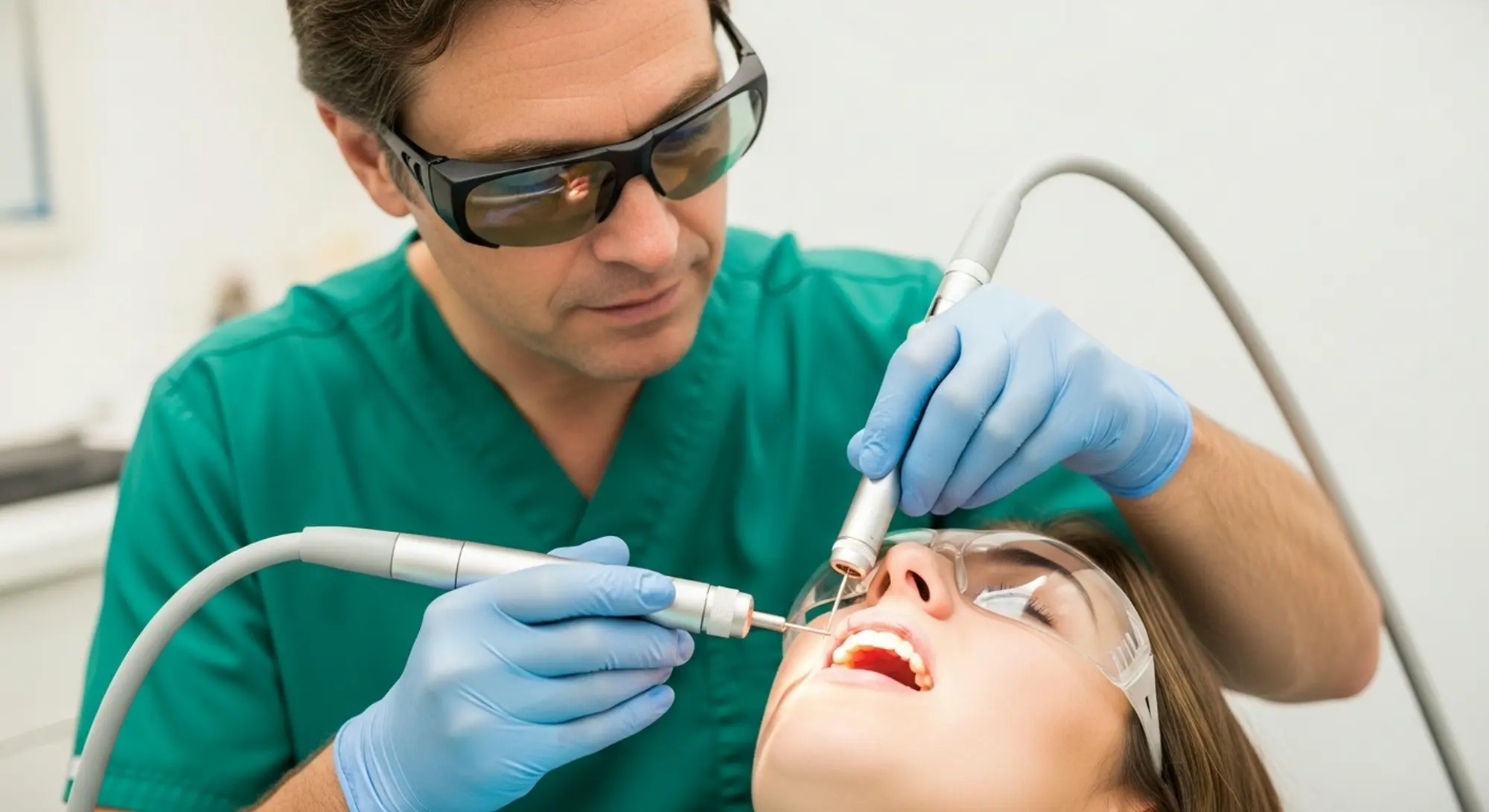
Here is the biology in plain terms. The laser is extraordinarily precise, targeting the bacteria and diseased tissue inside the periodontal pocket while leaving the healthy surrounding tissue undisturbed. That alone is a meaningful improvement over techniques that remove tissue more broadly.

But the second effect is what makes regeneration possible. As the laser works, it stimulates your body’s natural healing response in the treated area. Rather than simply creating a clean surface and hoping tissue reattaches, the procedure prompts the biological processes that allow bone and gum tissue to begin regenerating.

So the answer to how LANAP regenerates lost jawbone is really two answers working together. It removes the source of the destruction, and it signals your body to rebuild the foundation that destruction took. Your own cells do the rebuilding. We simply clear the obstacles and give them the prompt.

How the Laser Knows What to Target

Patients often ask how a laser can possibly distinguish diseased tissue from healthy tissue. It is a reasonable question, and the answer is genuinely elegant.

The PerioLase MVP-7 operates at a wavelength specifically calibrated to be absorbed by the dark pigments found in diseased tissue and harmful periodontal bacteria. Those pigments are essentially a target marker. Where they are present, the laser energy is absorbed and does its work.

Healthy pink gum tissue does not contain those pigments, so the same laser energy passes right through it without heating or harming it. This is what we mean by cellular selectivity, and it is the heart of why the procedure is so safe.

Because of that selectivity, there is virtually zero risk of accidentally removing healthy bone or damaging sound tissue. The laser simply cannot act where there is nothing for it to absorb into. It is a level of precision that traditional surgery, which relies entirely on the surgeon’s visual judgment and a blade, cannot duplicate.

Why This Isn’t the Gum Surgery Your Parents Remember

Some of our longtime patients respond to the phrase “gum surgery” with a visible flinch, and we understand why. We hear a version of the same story regularly: my father had gum surgery and was out of commission for weeks.

That memory is accurate. Traditional periodontal surgery involved cutting the gum tissue, folding it back to access the root surfaces and bone, then suturing everything closed. Recovery meant swelling, stitches, a restricted diet, and a genuinely rough stretch of days.

LANAP involves no cutting and no suturing. Because the tissue is never surgically opened, recovery is remarkably fast and post-procedure discomfort is minimal compared to what people remember from the older techniques. Most of our patients are surprised by how ordinary the following day feels.

We mention this early in conversations because fear of the old procedure keeps people from treating a condition that will not resolve on its own. If the memory of someone else’s gum surgery has been holding you back, the treatment we are describing is a fundamentally different experience.

What Bone Regrowth Realistically Means, and What It Doesn’t

Regeneration is genuinely remarkable, but it is not magic, and we would rather be straight with you than oversell it.

The amount of bone regeneration achievable varies from patient to patient and from site to site. It depends on how much bone was lost, the shape of the defect, your overall systemic health, and how your body responds. We can often restore meaningful support and stability. We cannot promise to return your bone to exactly what it looked like a decade ago.

The bigger expectation to reset is this: many people assume treating gum disease works like fixing a cavity. One appointment, problem solved, move on. Gum disease does not behave that way. It is more accurately understood as a chronic health condition that gets managed over time, closer to blood pressure than to a broken filling.

LANAP provides a fantastic reset. It eliminates the active disease and encourages regeneration, which hands you a clean slate you did not have before. What happens with that clean slate is the part that determines your long-term outcome.

The Partnership That Comes After the Procedure

Keeping gum disease at bay requires a real partnership, and that is not a figure of speech. It involves customized home care built around what you will actually do, consistent professional maintenance visits, and honest attention to your overall wellness.

That last piece is why Dr. Van Dyke wants to understand the story behind the disease before discussing any procedure. When someone comes in with periodontal disease, there is usually a reason, and it is rarely just poor brushing. Maybe you are managing diabetes. Maybe you have been under sustained stress. Maybe a reliable routine simply slipped away during a difficult stretch of life.

Oral health is deeply connected to systemic wellness, and the connection runs in both directions. Inflammation in your mouth does not stay in your mouth, and conditions elsewhere in your body affect how your gums heal.

LANAP gives us a minimally invasive path to a clean baseline. The real victory comes afterward, when we use that reset as a springboard to build realistic lifestyle changes together, ones tailored to your actual life rather than an ideal version of it. Sustainable beats ambitious every time.

Warning Signs Worth Catching Early

Gum disease does not announce itself, which is precisely what makes it dangerous. But if you know what to watch for, you can catch it early and make a treatment decision before it becomes a crisis.

Pay attention to persistent bleeding when you brush or floss. Occasional bleeding happens, but bleeding that shows up consistently is your body signaling inflammation. Notice gums that look swollen, red, or puffy rather than firm and pink. And take seriously any subtle sense that your teeth are shifting, feeling looser, or that your bite has changed slightly. That last one in particular often means the underlying bone structure is already under attack.

Catching the disease at these early stages changes everything about your options. Here on Marco Island, it means we can use LANAP proactively to save your teeth completely non-invasively, and you stay active and out on the water rather than working through a complicated treatment plan later.

What to Expect at Your Consultation

If you think you might have gum disease, or you have heard about LANAP and want to know whether it applies to your situation, here is what we want you to know before we meet.

The consultation is completely relaxed, transparent, and entirely zero pressure. We sit down together and use high-definition imaging so you can see exactly what is happening below your gum line, not just hear about it. Then we talk through your options clearly, including what we would recommend and why.

Dr. Van Dyke’s goal is not to sell you a procedure. It is to give you clear, honest information so that you can be an active partner in protecting your long-term health. Sometimes that conversation leads to LANAP. Sometimes it leads somewhere simpler. Either way, you will leave understanding your own mouth better than when you walked in.

Call Island Tower Dentistry at (239) 394-1004 to schedule your consultation. If gum disease has been quietly working against you, the sooner we look, the more we can save.

How Does Autologous Platelet-Rich Plasma (PRP) Accelerate Bone Healing After Dental Implant Placement?

When we first explain platelet-rich plasma to patients, we usually start with the same simple idea: your body is already packed with natural healing power. We are not adding anything foreign to the equation. We are concentrating the power you already have and directing it exactly where your body needs it most.

That word “autologous” sounds technical, but it means something reassuringly straightforward. It means the material comes from you. No donors, no synthetic substitutes, no unfamiliar biologics. Just your own blood, processed and concentrated, and returned to the one place it can do the most good.

At Island Tower Dentistry in Marco Island, Dr. Van Dyke uses PRP in select implant cases because the goal has never been simply to place an implant. The goal is to give that implant the strongest possible foundation for the rest of your life. Here is how PRP contributes to that, and just as importantly, what it realistically can and cannot do.

What Platelet-Rich Plasma Actually Is

The process is less dramatic than most patients expect.

We draw a small amount of your blood, usually right before your surgery begins. That sample goes into a centrifuge, which spins it at a controlled speed to separate its components by density. What we are after is the fraction rich in platelets and growth factors, the cells and signaling proteins your body naturally deploys whenever tissue needs to rebuild.

Once concentrated, that highly enriched plasma is placed directly at the surgical site, right where the implant and any grafting material are positioned. From there, it gets to work accelerating bone and soft tissue healing in the area that needs it most.

Because it is autologous, there is no question of rejection or incompatibility. We are simply taking something your body already produces and delivering a concentrated dose of it exactly where healing has to happen.

The Honest Answer to “How Much Faster Will I Heal?”

This is the question we field more than any other, and we would rather give you a precise answer than an exciting one.

PRP will not make your implants heal twice as fast. Anyone who tells you otherwise is overselling it. Bone biology has its own timeline, and osseointegration, the fusion of bone to implant, still takes the months it takes.

What the data does support is meaningful and specific. PRP significantly accelerates the initial stages of bone regeneration and soft tissue integration. In other words, it speeds up the beginning of the process rather than shortening the whole thing.

That distinction matters more than it might sound. The earliest phase of healing is when your implant is most vulnerable and when the foundation for everything that follows gets established. Strengthening that window means you arrive at the later stages of healing with better bone quality and a healthier surgical site than you otherwise would have. You get a stronger foundation precisely when you need it the most.

What Changes Inside the Surgical Site

From a chairside perspective, adding PRP to a case requires meticulous timing. Your blood has to be drawn and processed in a narrow window immediately before surgery so the growth factors are at peak activity when they are placed. It is a coordinated sequence, and our team plans your appointment around it.

Inside the surgical site, though, PRP actually simplifies the healing mechanics beautifully.

The concentrated platelet gel forms what we call a bioactive matrix, a biologically active scaffold that does two useful things at once. First, it optimizes clot stability, and a stable clot is the starting point for all the bone regeneration that follows. Second, it holds bone grafting material exactly where Dr. Van Dyke places it, rather than allowing it to migrate or wash out in the early hours after surgery.

For a surgeon, that is a meaningful advantage. Graft material that stays put is graft material that becomes bone in the location you intended. The result is greater surgical precision and a more predictable outcome, which is ultimately what every implant case is trying to achieve.

When PRP Moves From “Nice to Have” to “Should Have”

We do not use PRP in every single case, and we will always tell you honestly where yours falls. But there are situations where it shifts from an optional enhancement to something we strongly believe in.

If we are working with someone whose jawbone is not ideal, PRP becomes less of a nice to have and more of a should have. In softer bone, or in patients with a history of advanced gum disease, the body’s natural cellular signal for healing can be delayed. The instructions are still sent, they just arrive slowly, and slow healing in the early phase is exactly what you do not want around a new implant.

Placing concentrated growth factors directly into the implant site actively jumpstarts cellular recruitment. It floods the area with the specific proteins needed to build up and densify the bone matrix, tipping the scales heavily in favor of strong, successful integration.

For patients who have already lost bone or spent years managing periodontal disease, that head start can be the difference between a case we are cautiously optimistic about and a case we feel genuinely confident in.

Less Swelling, Less Soreness, Less Downtime

One of our patients once asked whether PRP would let him play golf the following week. It is a great question, and the answer comes down to inflammation and how quickly we can bring it under control.

Swelling after surgery is a normal, necessary part of healing, but the early inflammatory phase is also the source of most of the discomfort patients experience. The rapid flood of your body’s own growth factors helps regulate those early stages of swelling. By compressing that inflammatory phase, we noticeably reduce post-operative soreness.

For our active retirees here on Marco Island, that is not a minor detail. It means less time on the couch, less downtime overall, and a faster, more comfortable return to the pickleball courts, the fishing boats, and whatever else fills your week. People move here for a lifestyle, and we would rather not interrupt it any longer than we have to.

Bone, Soft Tissue, and Stability: PRP Improves All Three at Once

When we talk about implant success, we are really talking about three things working together: bone integration, soft tissue integration, and long-term stability. PRP does not affect only one of those. It enhances all three simultaneously, which is a significant part of its value.

The bone side is what most people focus on, and we have covered it above. The soft tissue side deserves more attention than it usually gets.

Your gum tissue acts as a vital protective seal around a new implant, keeping harmful bacteria out of the space where bone meets titanium. If that seal is loose or slow to mature, bacteria gain access to the very structure you are trying to protect. It is one of the most common pathways to long-term implant complications.

The growth factors in PRP strongly stimulate both epithelial and connective tissue healing, which produces a dense, tight, healthy gum seal around the implant. That seal then safeguards the underlying bone structure for years to come. Better bone and better tissue together produce the third outcome, which is stability that holds up over time rather than just at the start.

Is PRP Worth It, or Is It an Upsell?

Patients ask us this directly, and we respect the question. Anyone investing in implant treatment should be asking what each component of the plan is actually contributing.

Here is how we think about it clinically. The ultimate goal of any implant case is lifetime longevity, meaning an implant that serves you for decades rather than years. Every decision we make gets evaluated against that standard.

Choosing PRP means using premium autologous biotechnology to minimize surgical risk and maximize early bone density. It is not a cosmetic add-on and it is not a convenience item. It is a measure aimed squarely at the durability of the result.

When it comes to securing the long-term success of your smile, harnessing your body’s own healing power is, in our view, a genuinely smart investment. That said, we will tell you plainly when we think a case does not call for it. A recommendation only means something if it is given selectively.

Why PRP Eases Anxiety for Nervous Patients

Something we did not anticipate when we began offering PRP is how much it changes the emotional experience for anxious patients.

Dental anxiety often has less to do with the procedure itself than with uncertainty. Patients worry about unknown healing timelines and about pain they cannot predict or control. That uncertainty is what keeps people awake the night before surgery.

When they understand that we are harnessing a completely natural, exceptionally safe component of their own body to actively prevent complications and suppress inflammation, something shifts. The anxiety tends to melt away, and it is replaced by a sense of partnership. We have had patients tell us they stopped feeling like a procedure was happening to them and started feeling like they were participating in their own recovery.

That sense of control and confidence over the recovery journey is worth something real, both for how patients feel and for how well they follow through on post-operative care.

Let’s Talk About Whether PRP Is Right for Your Case

PRP is a clinical judgment call, and it should be. The right answer depends on your bone quality, your periodontal history, your overall health, and the complexity of the case in front of us. What we can promise is a straight conversation about it, including whether we think it would meaningfully improve your outcome.

If you are considering dental implants, or if you have been told your bone quality makes you a difficult candidate, we would be glad to take a look and walk you through your options. Dr. Van Dyke offers complimentary implant consultations, and you will leave understanding your situation whether or not you decide to move forward with us.

Call Island Tower Dentistry at (239) 394-1004 to schedule your free consultation. Your body already has remarkable healing capability, and we would love to show you how we put it to work.

We’ll Keep Your Smile Looking Beautiful

  • 606 Bald Eagle Dr. Ste 200, Marco Island, Florida 34145
  • Monday through Thursday | 8:00 am - 4:00 pm

  • Closed Fridays | Call our office for emergencies

Learn More About Island Tower Dentistry