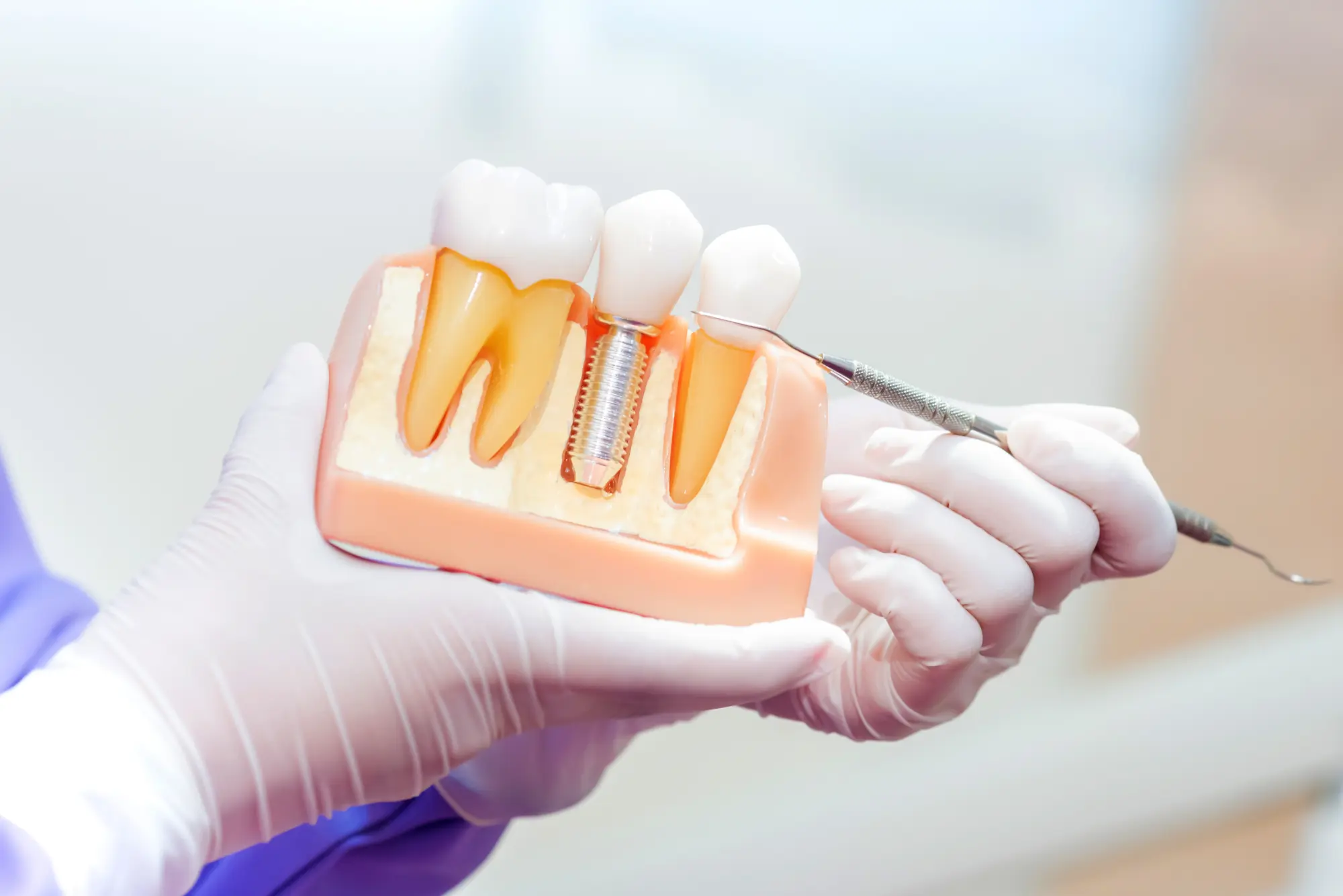
How Does Autologous Platelet-Rich Plasma (PRP) Accelerate Bone Healing After Dental Implant Placement?
When we first explain platelet-rich plasma to patients, we usually start with the same simple idea: your body is already packed with natural healing power. We are not adding anything foreign to the equation. We are concentrating the power you already have and directing it exactly where your body needs it most.
That word “autologous” sounds technical, but it means something reassuringly straightforward. It means the material comes from you. No donors, no synthetic substitutes, no unfamiliar biologics. Just your own blood, processed and concentrated, and returned to the one place it can do the most good.
At Island Tower Dentistry in Marco Island, Dr. Van Dyke uses PRP in select implant cases because the goal has never been simply to place an implant. The goal is to give that implant the strongest possible foundation for the rest of your life. Here is how PRP contributes to that, and just as importantly, what it realistically can and cannot do.
What Platelet-Rich Plasma Actually Is
The process is less dramatic than most patients expect.
We draw a small amount of your blood, usually right before your surgery begins. That sample goes into a centrifuge, which spins it at a controlled speed to separate its components by density. What we are after is the fraction rich in platelets and growth factors, the cells and signaling proteins your body naturally deploys whenever tissue needs to rebuild.
Once concentrated, that highly enriched plasma is placed directly at the surgical site, right where the implant and any grafting material are positioned. From there, it gets to work accelerating bone and soft tissue healing in the area that needs it most.
Because it is autologous, there is no question of rejection or incompatibility. We are simply taking something your body already produces and delivering a concentrated dose of it exactly where healing has to happen.
The Honest Answer to “How Much Faster Will I Heal?”
This is the question we field more than any other, and we would rather give you a precise answer than an exciting one.
PRP will not make your implants heal twice as fast. Anyone who tells you otherwise is overselling it. Bone biology has its own timeline, and osseointegration, the fusion of bone to implant, still takes the months it takes.
What the data does support is meaningful and specific. PRP significantly accelerates the initial stages of bone regeneration and soft tissue integration. In other words, it speeds up the beginning of the process rather than shortening the whole thing.
That distinction matters more than it might sound. The earliest phase of healing is when your implant is most vulnerable and when the foundation for everything that follows gets established. Strengthening that window means you arrive at the later stages of healing with better bone quality and a healthier surgical site than you otherwise would have. You get a stronger foundation precisely when you need it the most.
What Changes Inside the Surgical Site
From a chairside perspective, adding PRP to a case requires meticulous timing. Your blood has to be drawn and processed in a narrow window immediately before surgery so the growth factors are at peak activity when they are placed. It is a coordinated sequence, and our team plans your appointment around it.
Inside the surgical site, though, PRP actually simplifies the healing mechanics beautifully.
The concentrated platelet gel forms what we call a bioactive matrix, a biologically active scaffold that does two useful things at once. First, it optimizes clot stability, and a stable clot is the starting point for all the bone regeneration that follows. Second, it holds bone grafting material exactly where Dr. Van Dyke places it, rather than allowing it to migrate or wash out in the early hours after surgery.
For a surgeon, that is a meaningful advantage. Graft material that stays put is graft material that becomes bone in the location you intended. The result is greater surgical precision and a more predictable outcome, which is ultimately what every implant case is trying to achieve.
When PRP Moves From “Nice to Have” to “Should Have”
We do not use PRP in every single case, and we will always tell you honestly where yours falls. But there are situations where it shifts from an optional enhancement to something we strongly believe in.
If we are working with someone whose jawbone is not ideal, PRP becomes less of a nice to have and more of a should have. In softer bone, or in patients with a history of advanced gum disease, the body’s natural cellular signal for healing can be delayed. The instructions are still sent, they just arrive slowly, and slow healing in the early phase is exactly what you do not want around a new implant.
Placing concentrated growth factors directly into the implant site actively jumpstarts cellular recruitment. It floods the area with the specific proteins needed to build up and densify the bone matrix, tipping the scales heavily in favor of strong, successful integration.
For patients who have already lost bone or spent years managing periodontal disease, that head start can be the difference between a case we are cautiously optimistic about and a case we feel genuinely confident in.
Less Swelling, Less Soreness, Less Downtime
One of our patients once asked whether PRP would let him play golf the following week. It is a great question, and the answer comes down to inflammation and how quickly we can bring it under control.
Swelling after surgery is a normal, necessary part of healing, but the early inflammatory phase is also the source of most of the discomfort patients experience. The rapid flood of your body’s own growth factors helps regulate those early stages of swelling. By compressing that inflammatory phase, we noticeably reduce post-operative soreness.
For our active retirees here on Marco Island, that is not a minor detail. It means less time on the couch, less downtime overall, and a faster, more comfortable return to the pickleball courts, the fishing boats, and whatever else fills your week. People move here for a lifestyle, and we would rather not interrupt it any longer than we have to.
Bone, Soft Tissue, and Stability: PRP Improves All Three at Once
When we talk about implant success, we are really talking about three things working together: bone integration, soft tissue integration, and long-term stability. PRP does not affect only one of those. It enhances all three simultaneously, which is a significant part of its value.
The bone side is what most people focus on, and we have covered it above. The soft tissue side deserves more attention than it usually gets.
Your gum tissue acts as a vital protective seal around a new implant, keeping harmful bacteria out of the space where bone meets titanium. If that seal is loose or slow to mature, bacteria gain access to the very structure you are trying to protect. It is one of the most common pathways to long-term implant complications.
The growth factors in PRP strongly stimulate both epithelial and connective tissue healing, which produces a dense, tight, healthy gum seal around the implant. That seal then safeguards the underlying bone structure for years to come. Better bone and better tissue together produce the third outcome, which is stability that holds up over time rather than just at the start.
Is PRP Worth It, or Is It an Upsell?
Patients ask us this directly, and we respect the question. Anyone investing in implant treatment should be asking what each component of the plan is actually contributing.
Here is how we think about it clinically. The ultimate goal of any implant case is lifetime longevity, meaning an implant that serves you for decades rather than years. Every decision we make gets evaluated against that standard.
Choosing PRP means using premium autologous biotechnology to minimize surgical risk and maximize early bone density. It is not a cosmetic add-on and it is not a convenience item. It is a measure aimed squarely at the durability of the result.
When it comes to securing the long-term success of your smile, harnessing your body’s own healing power is, in our view, a genuinely smart investment. That said, we will tell you plainly when we think a case does not call for it. A recommendation only means something if it is given selectively.
Why PRP Eases Anxiety for Nervous Patients
Something we did not anticipate when we began offering PRP is how much it changes the emotional experience for anxious patients.
Dental anxiety often has less to do with the procedure itself than with uncertainty. Patients worry about unknown healing timelines and about pain they cannot predict or control. That uncertainty is what keeps people awake the night before surgery.
When they understand that we are harnessing a completely natural, exceptionally safe component of their own body to actively prevent complications and suppress inflammation, something shifts. The anxiety tends to melt away, and it is replaced by a sense of partnership. We have had patients tell us they stopped feeling like a procedure was happening to them and started feeling like they were participating in their own recovery.
That sense of control and confidence over the recovery journey is worth something real, both for how patients feel and for how well they follow through on post-operative care.
Let’s Talk About Whether PRP Is Right for Your Case
PRP is a clinical judgment call, and it should be. The right answer depends on your bone quality, your periodontal history, your overall health, and the complexity of the case in front of us. What we can promise is a straight conversation about it, including whether we think it would meaningfully improve your outcome.
If you are considering dental implants, or if you have been told your bone quality makes you a difficult candidate, we would be glad to take a look and walk you through your options. Dr. Van Dyke offers complimentary implant consultations, and you will leave understanding your situation whether or not you decide to move forward with us.
Call Island Tower Dentistry at (239) 394-1004 to schedule your free consultation. Your body already has remarkable healing capability, and we would love to show you how we put it to work.