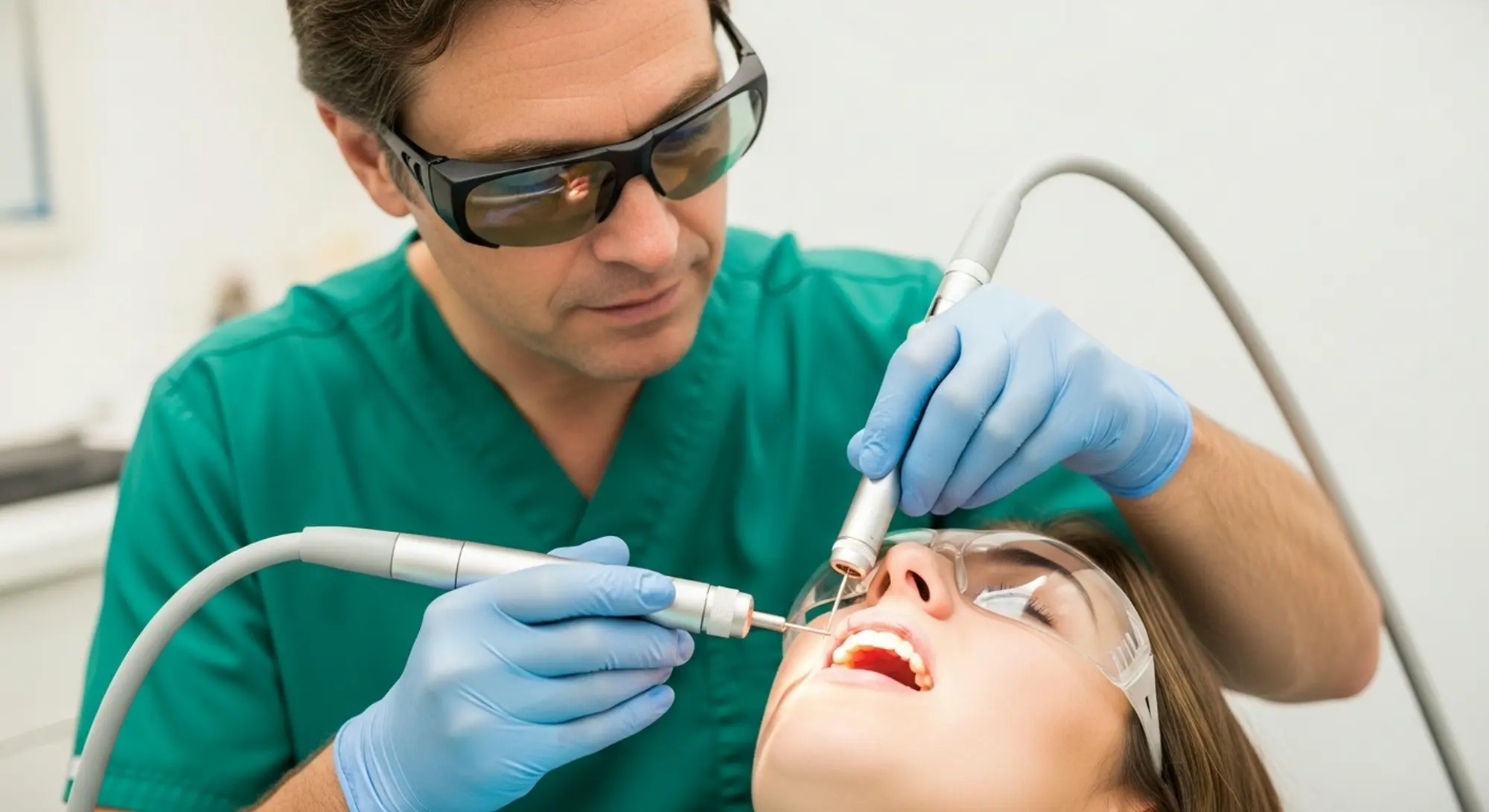
How Does LANAP Laser Surgery Regenerate Lost Jawbone Tissue Around Teeth Damaged by Gum Disease?
Most people think gum disease is just about gums. Bleeding when you brush, a little puffiness, maybe some tenderness. Annoying, but not alarming.
What is actually happening below the surface is more consequential than that. Gum disease is a chronic inflammatory condition, and when it goes untreated, it destroys the supporting bone structure that holds your teeth in place. That bone loss is the real story. It is what eventually produces loose teeth, shifting bites, and tooth loss, and for most of its course it does this quietly and without pain.
This is exactly why regeneration matters so much. If we can rebuild the lost foundation, we are not just cleaning up an infection. We are strengthening the attachment between tooth and bone and restoring genuine health to the area. At Island Tower Dentistry in Marco Island, Dr. Van Dyke was an early adopter of LANAP laser therapy for this reason, and here is how it works.
Gum Disease Is a Bone Problem, Not Just a Gum Problem
Think of your teeth the way you would think of fence posts set in soil. The post itself can be perfectly sound, but if the ground around it erodes, the post starts to move. Eventually it comes out.
Your jawbone is that ground. Periodontal bacteria trigger a chronic inflammatory response, and that inflammation gradually breaks down the bone surrounding your tooth roots. As bone recedes, the pockets between tooth and gum deepen, which gives bacteria a more protected place to live, which drives more inflammation. It becomes a cycle that feeds itself.
By the time a tooth actually feels loose, a significant amount of that foundation is already gone. That is the frustrating part of gum disease and also the reason we talk about it so often. Traditional treatment focused largely on stopping the destruction. What makes regeneration different is that it addresses what has already been lost.
How LANAP Triggers Regeneration Instead of Just Removing Tissue
When Dr. Van Dyke first trained in LANAP, the thing that stood out was not the absence of a scalpel. It was that the procedure does something conventional surgery does not: it actively encourages the body to rebuild.
Here is the biology in plain terms. The laser is extraordinarily precise, targeting the bacteria and diseased tissue inside the periodontal pocket while leaving the healthy surrounding tissue undisturbed. That alone is a meaningful improvement over techniques that remove tissue more broadly.
But the second effect is what makes regeneration possible. As the laser works, it stimulates your body’s natural healing response in the treated area. Rather than simply creating a clean surface and hoping tissue reattaches, the procedure prompts the biological processes that allow bone and gum tissue to begin regenerating.
So the answer to how LANAP regenerates lost jawbone is really two answers working together. It removes the source of the destruction, and it signals your body to rebuild the foundation that destruction took. Your own cells do the rebuilding. We simply clear the obstacles and give them the prompt.
How the Laser Knows What to Target
Patients often ask how a laser can possibly distinguish diseased tissue from healthy tissue. It is a reasonable question, and the answer is genuinely elegant.
The PerioLase MVP-7 operates at a wavelength specifically calibrated to be absorbed by the dark pigments found in diseased tissue and harmful periodontal bacteria. Those pigments are essentially a target marker. Where they are present, the laser energy is absorbed and does its work.
Healthy pink gum tissue does not contain those pigments, so the same laser energy passes right through it without heating or harming it. This is what we mean by cellular selectivity, and it is the heart of why the procedure is so safe.
Because of that selectivity, there is virtually zero risk of accidentally removing healthy bone or damaging sound tissue. The laser simply cannot act where there is nothing for it to absorb into. It is a level of precision that traditional surgery, which relies entirely on the surgeon’s visual judgment and a blade, cannot duplicate.
Why This Isn’t the Gum Surgery Your Parents Remember
Some of our longtime patients respond to the phrase “gum surgery” with a visible flinch, and we understand why. We hear a version of the same story regularly: my father had gum surgery and was out of commission for weeks.
That memory is accurate. Traditional periodontal surgery involved cutting the gum tissue, folding it back to access the root surfaces and bone, then suturing everything closed. Recovery meant swelling, stitches, a restricted diet, and a genuinely rough stretch of days.
LANAP involves no cutting and no suturing. Because the tissue is never surgically opened, recovery is remarkably fast and post-procedure discomfort is minimal compared to what people remember from the older techniques. Most of our patients are surprised by how ordinary the following day feels.
We mention this early in conversations because fear of the old procedure keeps people from treating a condition that will not resolve on its own. If the memory of someone else’s gum surgery has been holding you back, the treatment we are describing is a fundamentally different experience.
What Bone Regrowth Realistically Means, and What It Doesn’t
Regeneration is genuinely remarkable, but it is not magic, and we would rather be straight with you than oversell it.
The amount of bone regeneration achievable varies from patient to patient and from site to site. It depends on how much bone was lost, the shape of the defect, your overall systemic health, and how your body responds. We can often restore meaningful support and stability. We cannot promise to return your bone to exactly what it looked like a decade ago.
The bigger expectation to reset is this: many people assume treating gum disease works like fixing a cavity. One appointment, problem solved, move on. Gum disease does not behave that way. It is more accurately understood as a chronic health condition that gets managed over time, closer to blood pressure than to a broken filling.
LANAP provides a fantastic reset. It eliminates the active disease and encourages regeneration, which hands you a clean slate you did not have before. What happens with that clean slate is the part that determines your long-term outcome.
The Partnership That Comes After the Procedure
Keeping gum disease at bay requires a real partnership, and that is not a figure of speech. It involves customized home care built around what you will actually do, consistent professional maintenance visits, and honest attention to your overall wellness.
That last piece is why Dr. Van Dyke wants to understand the story behind the disease before discussing any procedure. When someone comes in with periodontal disease, there is usually a reason, and it is rarely just poor brushing. Maybe you are managing diabetes. Maybe you have been under sustained stress. Maybe a reliable routine simply slipped away during a difficult stretch of life.
Oral health is deeply connected to systemic wellness, and the connection runs in both directions. Inflammation in your mouth does not stay in your mouth, and conditions elsewhere in your body affect how your gums heal.
LANAP gives us a minimally invasive path to a clean baseline. The real victory comes afterward, when we use that reset as a springboard to build realistic lifestyle changes together, ones tailored to your actual life rather than an ideal version of it. Sustainable beats ambitious every time.
Warning Signs Worth Catching Early
Gum disease does not announce itself, which is precisely what makes it dangerous. But if you know what to watch for, you can catch it early and make a treatment decision before it becomes a crisis.
Pay attention to persistent bleeding when you brush or floss. Occasional bleeding happens, but bleeding that shows up consistently is your body signaling inflammation. Notice gums that look swollen, red, or puffy rather than firm and pink. And take seriously any subtle sense that your teeth are shifting, feeling looser, or that your bite has changed slightly. That last one in particular often means the underlying bone structure is already under attack.
Catching the disease at these early stages changes everything about your options. Here on Marco Island, it means we can use LANAP proactively to save your teeth completely non-invasively, and you stay active and out on the water rather than working through a complicated treatment plan later.
What to Expect at Your Consultation
If you think you might have gum disease, or you have heard about LANAP and want to know whether it applies to your situation, here is what we want you to know before we meet.
The consultation is completely relaxed, transparent, and entirely zero pressure. We sit down together and use high-definition imaging so you can see exactly what is happening below your gum line, not just hear about it. Then we talk through your options clearly, including what we would recommend and why.
Dr. Van Dyke’s goal is not to sell you a procedure. It is to give you clear, honest information so that you can be an active partner in protecting your long-term health. Sometimes that conversation leads to LANAP. Sometimes it leads somewhere simpler. Either way, you will leave understanding your own mouth better than when you walked in.
Call Island Tower Dentistry at (239) 394-1004 to schedule your consultation. If gum disease has been quietly working against you, the sooner we look, the more we can save.